Home › Nutrition
Frozen Yogurt Nutrition: What's Really in Your Cup
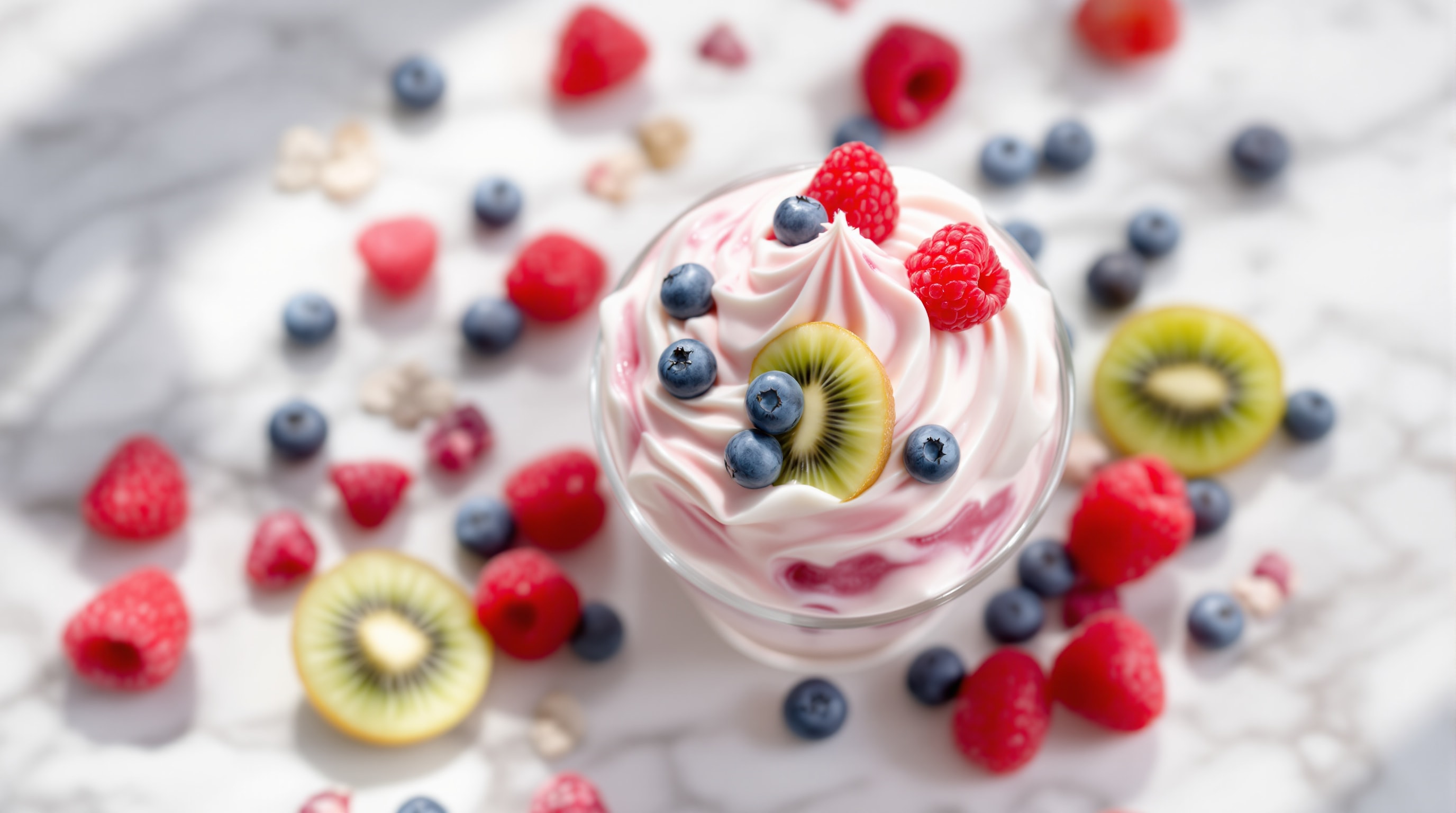
Frozen yogurt has a health halo, and like most halos it is only partly earned. Whether a cup is a reasonably light treat or a dessert bomb comes down to three things: the base, the sweetener, and — more than anything — the toppings and portion size. Here is a clear, non-judgmental look at the numbers.
Calories and Portion Size
A modest half-cup serving of frozen yogurt typically lands somewhere around 100 to 140 calories, which is genuinely lighter than the same volume of premium ice cream. The catch is that almost no one eats a half cup at a self-serve bar. The cups are large, the levers are generous, and the scale charges by weight, so it is easy to walk away with three or four servings. The single most effective thing you can do for the nutrition of your froyo is simply to pull the lever for less time.
For exact figures on any specific product, the U.S. Department of Agriculture's FoodData Central database is the authoritative reference, and packaged frozen yogurt carries a standard Nutrition Facts label defined by the U.S. Food and Drug Administration.
Sweeteners: Fructose, Sucrose, and HFCS
Not all sugar in frozen yogurt is the same, though the body treats most of it similarly in the end. A few terms worth knowing:
- Sucrose — ordinary table or cane sugar, half glucose and half fructose bonded together.
- Crystalline fructose — a nearly pure fructose sweetener. Because it is sweeter than table sugar, a little goes a long way, so some recipes use less of it by weight.
- High-fructose corn syrup (HFCS) — a liquid sweetener made from corn starch, common in mass-market desserts and soft drinks.
- Honey and agave — "natural" sweeteners that still raise blood sugar much like table sugar does.
Marketing often draws a sharp line between these, but nutrition scientists are more measured. As Harvard's Nutrition Source notes, the total amount of added sugar you eat matters far more than the specific form it takes. The healthiest move is not hunting for a magic sweetener — it is keeping the overall sugar load in check.
Fat and the "Nonfat" Question
Frozen yogurt spans a wide range of fat content. Traditional recipes made with whole-milk yogurt are richer; many shop varieties are made with nonfat or low-fat yogurt, which is why they can taste lighter and slightly icier. Nonfat is not automatically "better" — fat carries flavor and improves texture, and a small amount can make a cup more satisfying so you eat less of it. It is a trade-off, not a rule.
Live Cultures and Protein
Because it starts as cultured milk, frozen yogurt can contain beneficial live and active cultures and a modest amount of protein and calcium. Not every frozen yogurt keeps its cultures alive through processing, however — look for the National Yogurt Association's "Live & Active Cultures" seal, explained in our guide to live and active cultures. The National Center for Complementary and Integrative Health offers a level-headed overview of what probiotics can and cannot do.
The Bottom Line
Frozen yogurt can be a lighter dessert than ice cream, especially in a sensible portion and with fruit rather than candy on top. But it is still a treat, and a heaped, topping-laden cup can rival a milkshake. Enjoy it as what it is — dessert that happens to bring a little something extra to the table. For the full picture, compare it head to head in our frozen yogurt vs. ice cream breakdown.